
The Significance of Pride
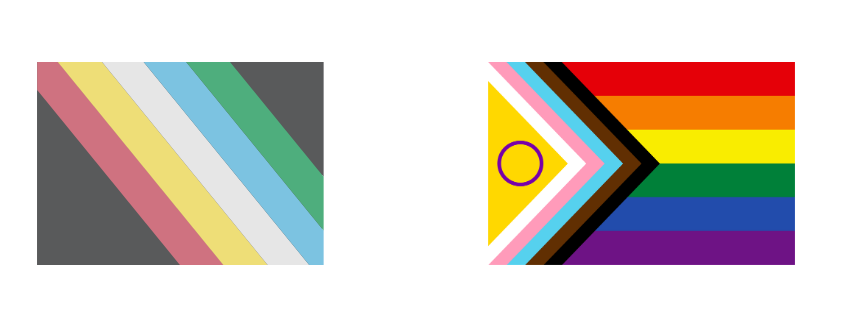
Graphic images of the Disability Pride flag (left) and the LGBTQ+ flag (right).
Pride begins with learning to love the parts of ourselves the world once told us to hide.
Learning to love ourselves isn't always easy when the world has spent so much time telling us we should be different. Disabled people hear those messages every day, sometimes from strangers, sometimes from systems, and sometimes even from the people closest to us. Disability Pride invites us to let go of that shame and recognize that we have always been worthy of dignity, belonging, and love.
Maybe that's why Disability Pride feels so deeply connected to LGBTQ+ Pride.
Both are rooted in the belief that no one should have to hide who they are to be accepted. Both remind us that our differences are not something to apologize for, but something that makes our communities stronger.
There is a feeling that too many people know well: walking into a room and realizing someone has already decided who you are before you've said a single word. Whether it is because of your disability, your gender, your race, your faith, or another part of your identity, it is painful to be seen through assumptions instead of humanity. Transgender people face that reality every day, often alongside bullying, discrimination, violence, and barriers to healthcare.
Recent conversations have reminded us that prejudice is not a thing of the past. It still finds its way into our communities, often hiding behind comment sections and computer screens. That is exactly why solidarity, visibility, and Pride still matter.
At DPC, we proudly stand with our transgender community and the entire LGBTQ+ community. Many members of our staff, leadership, partners, and broader disability community are transgender or identify as LGBTQ+. They are not an exception to our community. They are an essential part of it.
Perhaps that is why so many disabled people so often stand beside other marginalized communities.
We know what it feels like to have our worth questioned, our voices dismissed, or our lives reduced to assumptions. Those experiences have made us stronger advocates, teaching us to recognize injustice, speak up when others are being harmed, and build the kind of community we wish more people had found when they needed it most.
That is why it hurts to see disability used as an insult.
We've seen comments suggesting someone must have a mental health condition or intellectual disability simply because they appear queer. Those comments don't just harm the person they're directed toward. They also reinforce the harmful idea that disability itself is something shameful.
It isn't.
Mental health conditions are not insults. Intellectual and developmental disabilities are not insults. Physical disabilities are not insults. Disability is not something to weaponize against another person.
Rejecting that kind of thinking is part of what Disability Pride asks of us. Because Disability Pride is not only about learning to love ourselves. It is about loving one another, too.
We are stronger because we know what it feels like to face barriers, exclusion, bullying, and discrimination. Those experiences have taught us empathy and the power in standing together.
We know what it takes to learn to love the parts of ourselves the world once told us to hide.
So when others are told to hide who they are, we won't stand by quietly.
We'll stand beside them.
Resources to learn more:
“How the Disability and LGBTQI+ Communities Intersect,” article, Center for American Progress
“Two Months, One Movement: Celebrating the Intersection of LGBTQ+ and Disability Pride,” blog post, Center for People with Disabilities
“LGBTQ and Disabled Communities: Social Struggles We Share,” blog post, Autistic Self Advocacy Network
Do you have a resource that should be added to this list? Please reach out to dev@dpcma.org.